
Wenlock Edge, Shropshire is the ideal setting for a detective telenovela.
Before elaborating further upon this claim, I should warn any reading ITV producers that my recommendation of Wenlock Edge does not apply to the traditional murder-mystery genre.
Rather, it applies to the more niche management mystery genre.
A well-written detective would observe Wenlock at a glance, see its past laid bare soon after, and be done with it in a 1 hour block (with advertisements).
Unfortunately, I am not a specialist in the management mystery genre. Statistically, neither are you.
Nonetheless, what would our detective character have to say of Wenlock Edge?
Clue 1: ancient woodland indicator species:
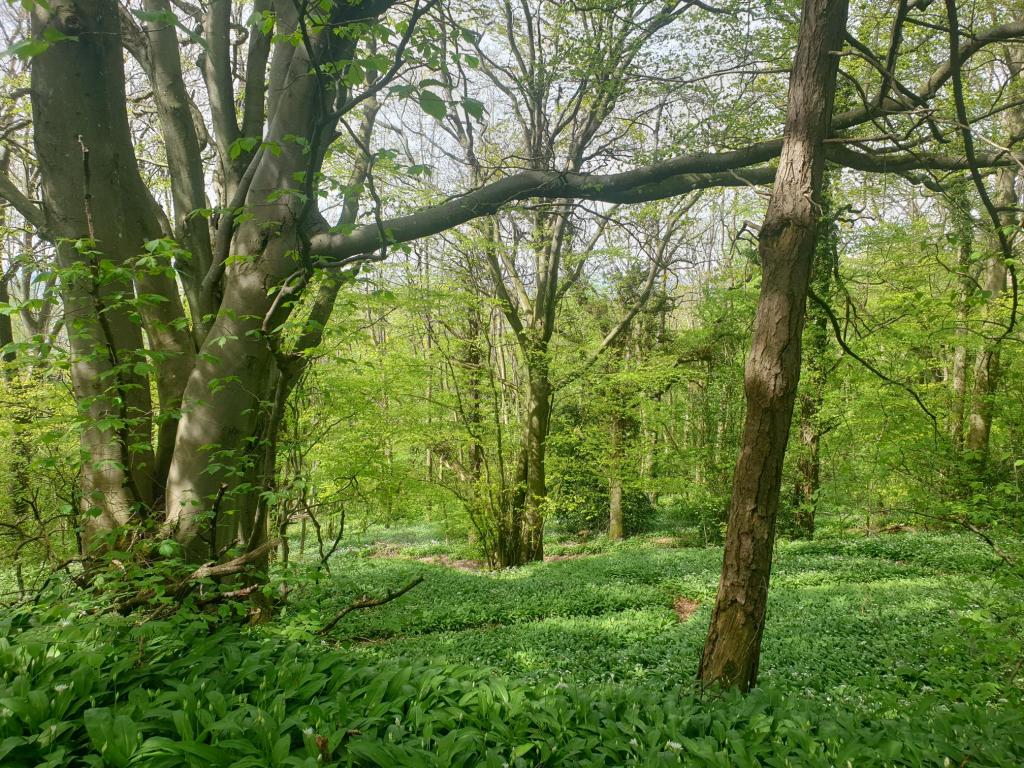
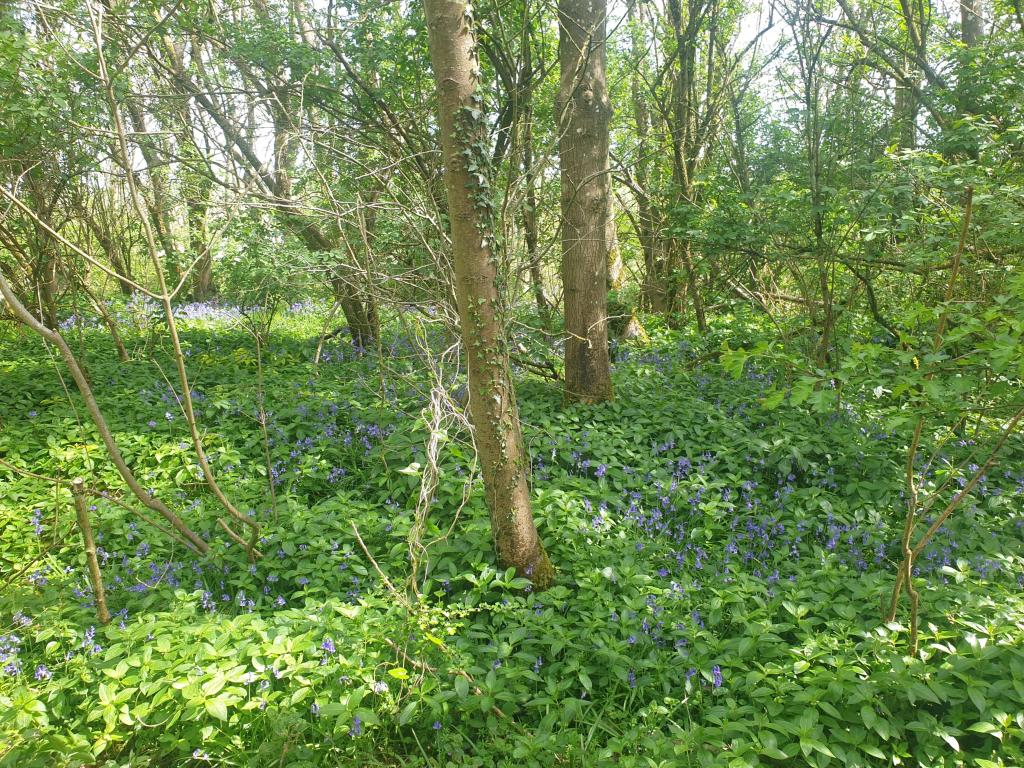
Multiple species of ground flora found throughout Wenlock Edge are “ancient woodland indicator species”.
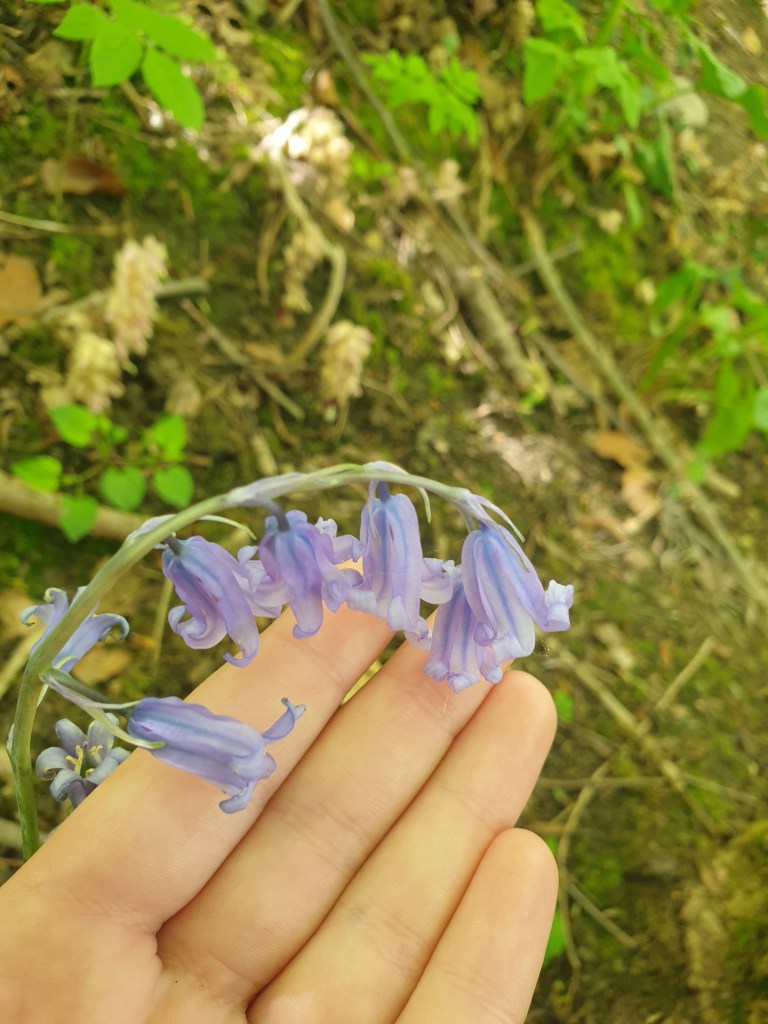
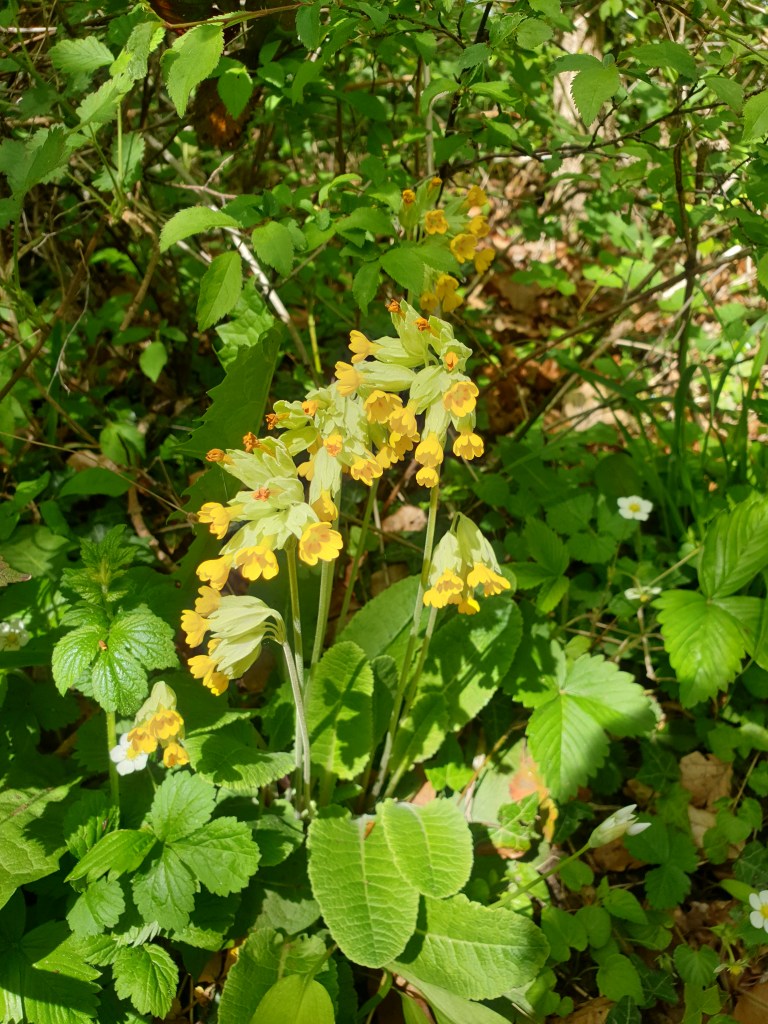
The list of ancient woodland indicator species present includes:
- Wild garlic (Allium ursinum)
- Common Bluebell (Hyacinthoides non-scripta)
- Cowslip (Primula veris)
- Dog’s mercury (Mercurialis perennis)
The presence of these plant species suggests that Wenlock Edge has been continuously wooded since at least 1600 (Woodland Trust, 2025)!
The National Trust webpage for Wenlock confirms our inference; Wenlock Edge is an ancient woodland (National Trust, 2025).

Clue 2: multi-stemmed trees:
Multi-stemmed hazel (Corylus avellana) is common throughout the woodland, having grown in such a manner due to coppicing.
For those who may not know, coppicing was once a common silvicultural practice in England, with neglected or active coppice stools being common features of ancient woodlands.
An appropriate tree species is cut down to near ground level, so that multiple new shoots will emerge from the base. After between 7-20 years, these shoots will be harvested as “underwood”.
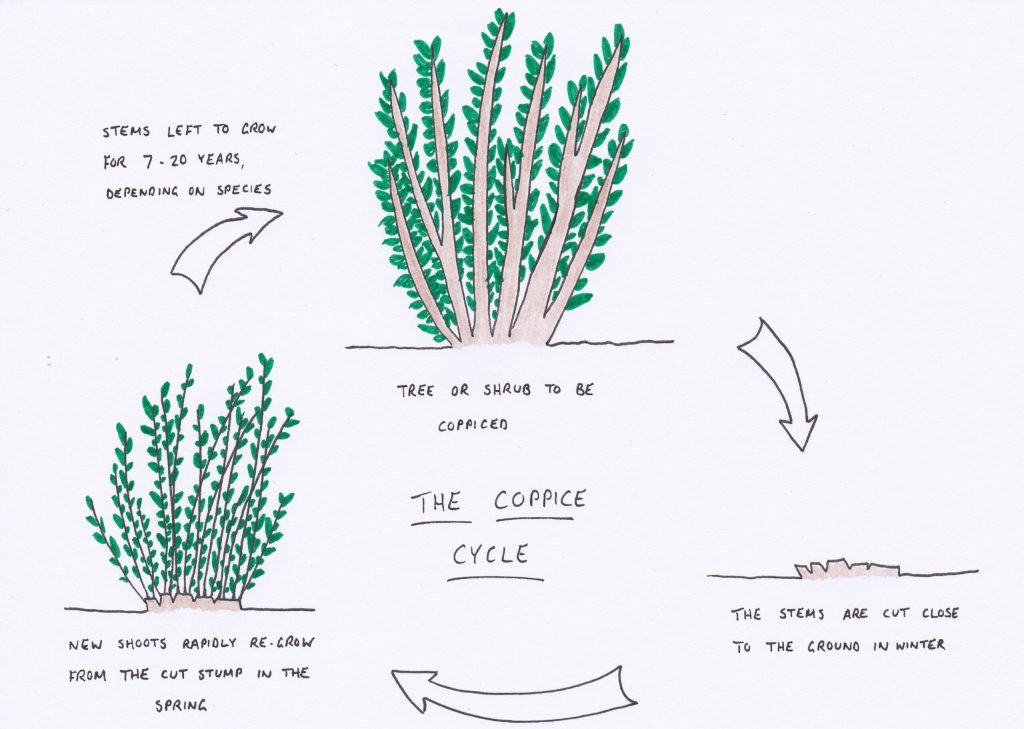
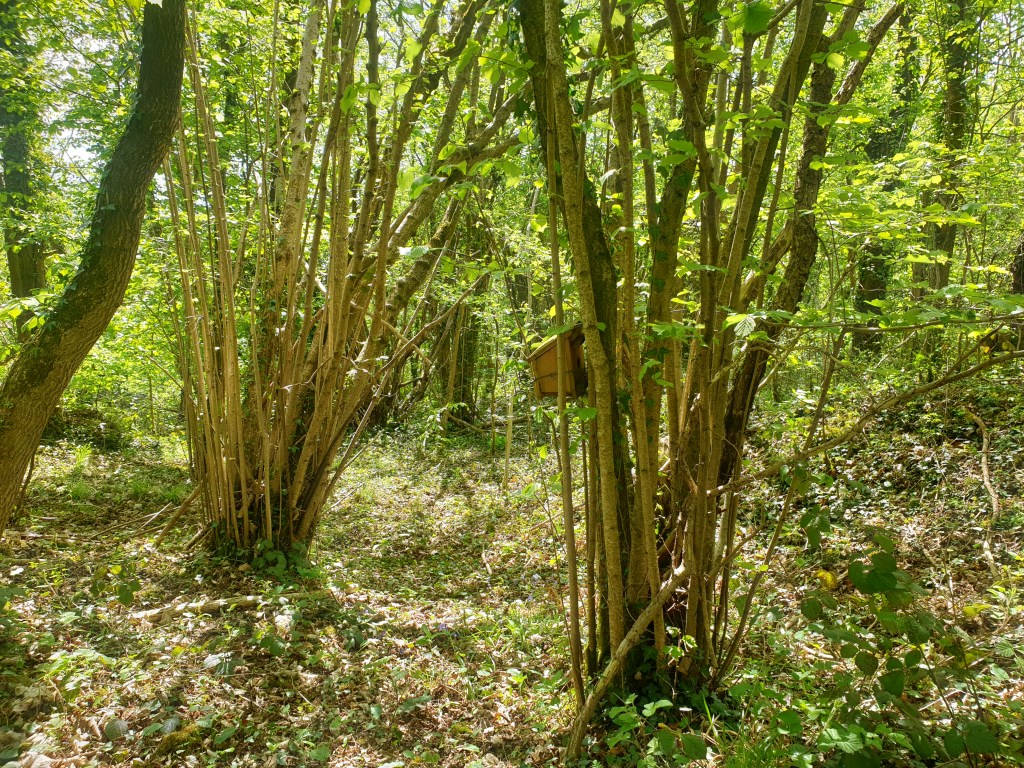


The hazel coppice present within Wenlock Edge is over-stood, suggesting that whilst the woodland was once managed for underwood production, it is no longer.
This makes sense, as modern-life demands far less underwood than in the past. Thus, coppicing is no longer viewed as economically viable in many parts of England, instead being employed for conservation purposes only (Rackham, 2003).
However, some environmental and business bodies, such as the National Coppice Federation, are advocating for coppicing’s return as a mainstream and profitable silvicultural practice (National Coppice Federation, 2022).
Clue 3: anomalously sparse canopy:
The canopy has already happily emerged for most of the detective’s late April walk thus far.
However, upon observing Wenlock’s ash (Fraxinus excelsior), such health and vigour is not observed.
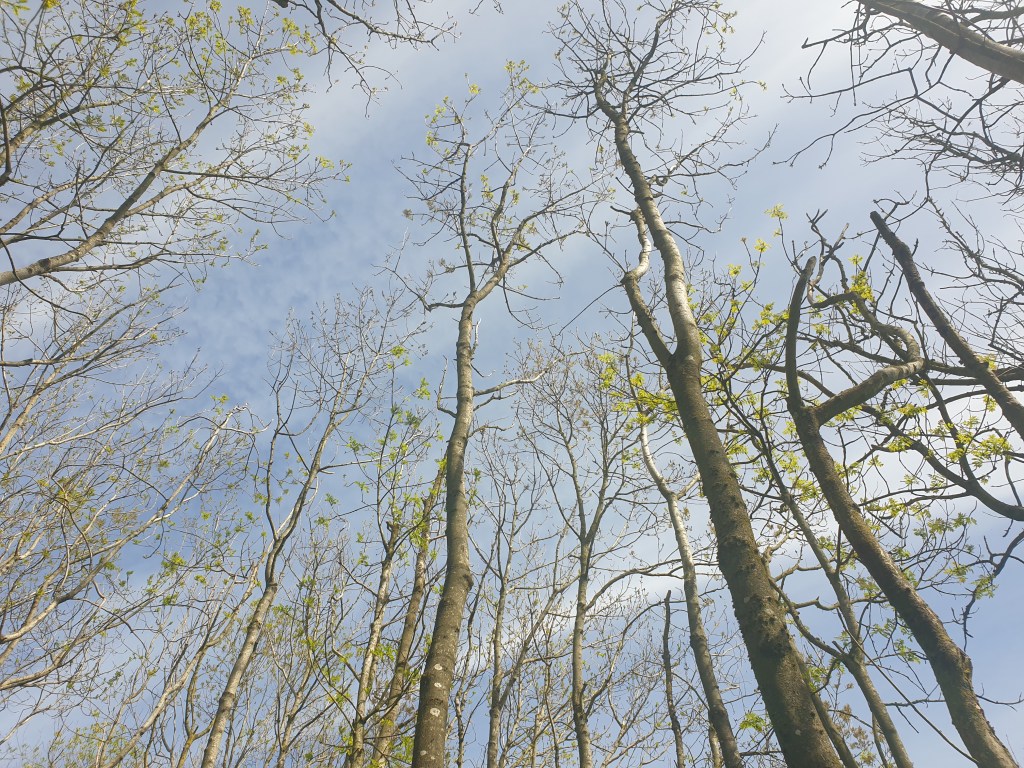
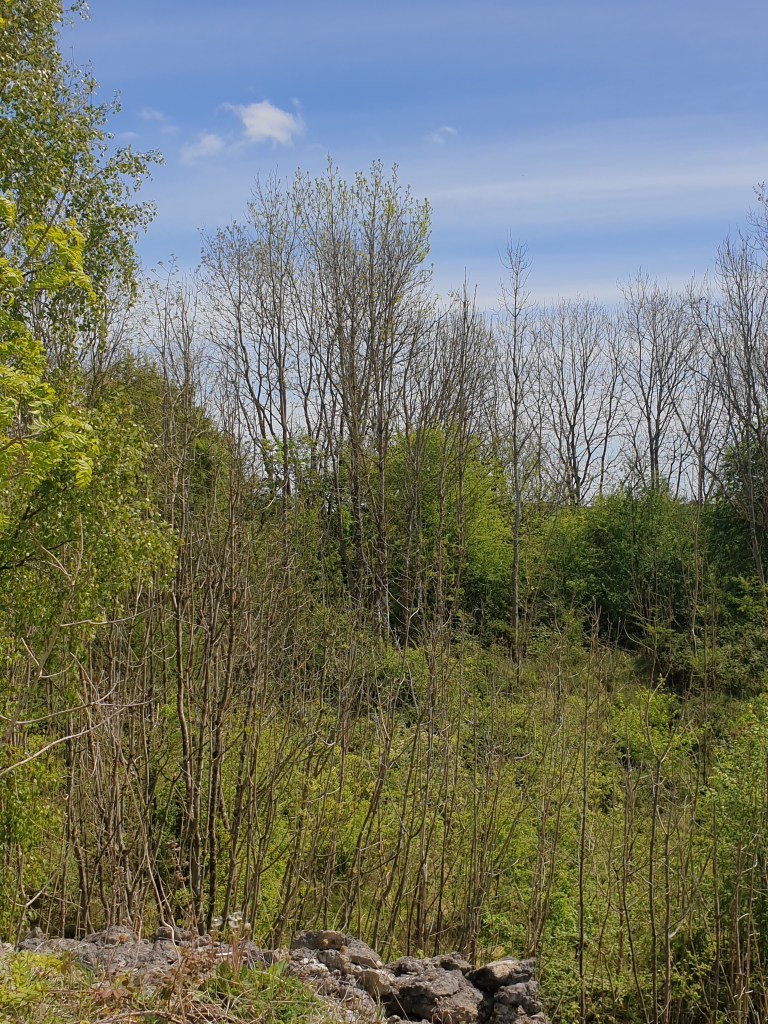
Ash not having emerged yet is not wholly unusual. Ash flushes relatively late in the year compared to other British broadleaves, leafing between late April – May in many cases (Forestry England, 2025).
However, our detective is statistically-minded, and wise to the world of plant disease.
Thus, the presence of the fungus Hymenoscyphus fraxineus, aka ash dieback disease, is suspected.
This would be a valid suspicion too, with the National Trust confirming the presence of ash dieback disease at Wenlock Edge (National Trust, 2024).
Thus, ash dieback is likely our mystery’s “killer”, with the pathogen resulting in the observed leaf loss and crown dieback in Wenlock’s ash (Combes, Webber, & Boddy, 2024).
Conclusion
For those with an interest in the management mystery genre, or even just in want of a quiet walk, I would highly recommend Wenlock Edge.
There are many more “clues” for the reader to find at Wenlock Edge, but if Shropshire’s too far, this exercise can be done in any woodland near you!
Finally, thank you for reading.
If you have any suggestions for future posts, leave them in the comments.
– Bethany Breward
29/04/2025.
References
Combes, M., Webber, J. & Boddy, L. 2024. Current understanding and future prospects for ash dieback disease with a focus on Britain. Forestry:An International Journal of Forest Research. [E-journal]. 97(5), pp. 678-691. Available at: https://doi.org/10.1093/forestry/cpae040. Accessed 29th April 2025.
Forestry England. 2025. Ash tree. [Online]. Available at: https://www.forestryengland.uk/article/ash. Accessed 29th April 2025.
Hadley, G. 2022. The Coppice Cycle – a truly sustainable system. [Photograph]. Available at: https://ncfed.org.uk/public/coppicing/. Accessed 28th April 2025.
National Coppice Federation. 2022. Coppicing in a nutshell. [Online]. Available at: https://ncfed.org.uk/public/coppicing/. Accessed 28th April 2025.
National Trust. 2024. Our work at Wenlock Edge. [Online]. Available at: https://www.nationaltrust.org.uk/visit/shropshire-staffordshire/wenlock-edge/our-work-at-wenlock-edge. Accessed 29th April 2025.
National Trust. 2025. Wenlock Edge. [Online]. Available at: https://www.nationaltrust.org.uk/visit/shropshire-staffordshire/wenlock-edge. Accessed 28th April 2025.
Rackham, O. 2003. Ancient woodland : its history, vegetation and uses in England. Dalbeattie, Kirkudbrightshire: Castlepoint.
Woodland Trust. 2025. Ancient Woodland. [Online]. Available at: https://www.woodlandtrust.org.uk/trees-woods-and-wildlife/habitats/ancient-woodland/. Accessed 28th April 2025.
 Forests in Theory
Leave a comment