
Mario Kart World is releasing this week (June 5th)!

To celebrate, Forests in Theory is ranking the woodland management regimes of the franchise’s various wooded race tracks, from worst to best.
To note is that ranking is based off of the quality of observed woodland management, not how “good” the woodland is in its own right.
So, let’s see the rankings!
4. DK Jungle – Mario Kart 7
In terms of its woodland management regime, DK Jungle is definitively the worst Mario Kart track.
On the one hand, being set in a tropical rainforest means that DK Jungle is predisposed towards a higher biodiversity than the other wooded tracks on this list (Hill & Hill, 2001).

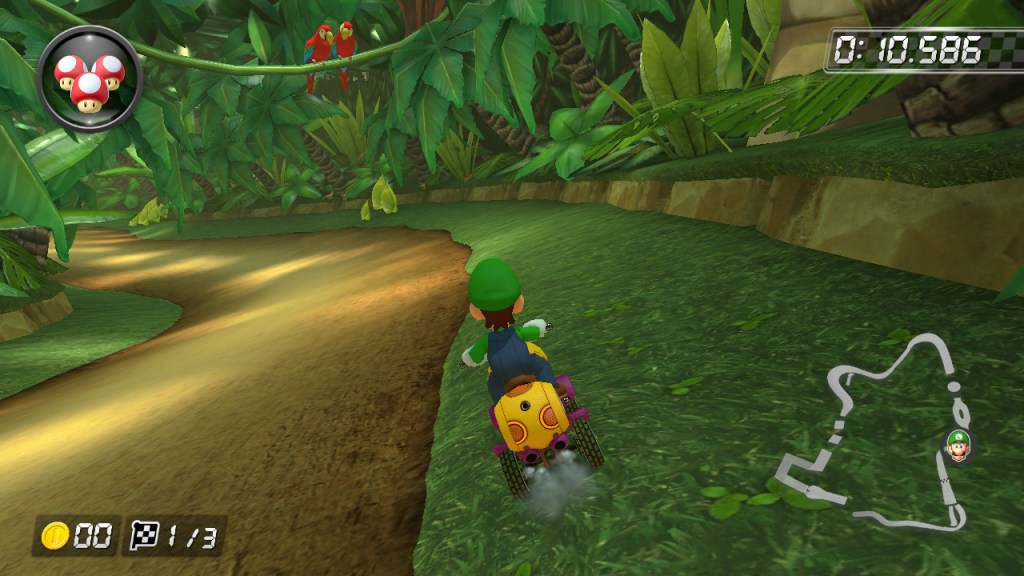
On the other hand, there is no evidence to suggest that any of this observed biodiversity is due to appropriate management on Donkey Kong’s part. In fact, any remaining wildlife may be in spite of him!
For example, he has needlessly erected a large banana shrine in the middle of the racetrack, thus partially obstructing vehicular access to the rest of DK Jungle.
Whilst go-karts can get past, I doubt a harvester, forwarder, or timber lorry could!

Furthermore, this banana idol suggests that Donkey Kong is woefully misappropriating management funds and resources in order to satiate his own desire for bananas!
Thus, DK Jungle is the lowest ranking Mario Kart woodland management regime.
3. Maple Treeway – Mario Kart Wii
Maple Treeway is a mixed bag in terms of woodland management.
Two herbivorous Wigglers are seen along the racetrack, having been fenced into this area as a form of managed grazing.
This has created good grassland habitat along the track, and helps Maple Treeway to meet the UKFS minimum 10% open space requirement (UKFS, 2023).
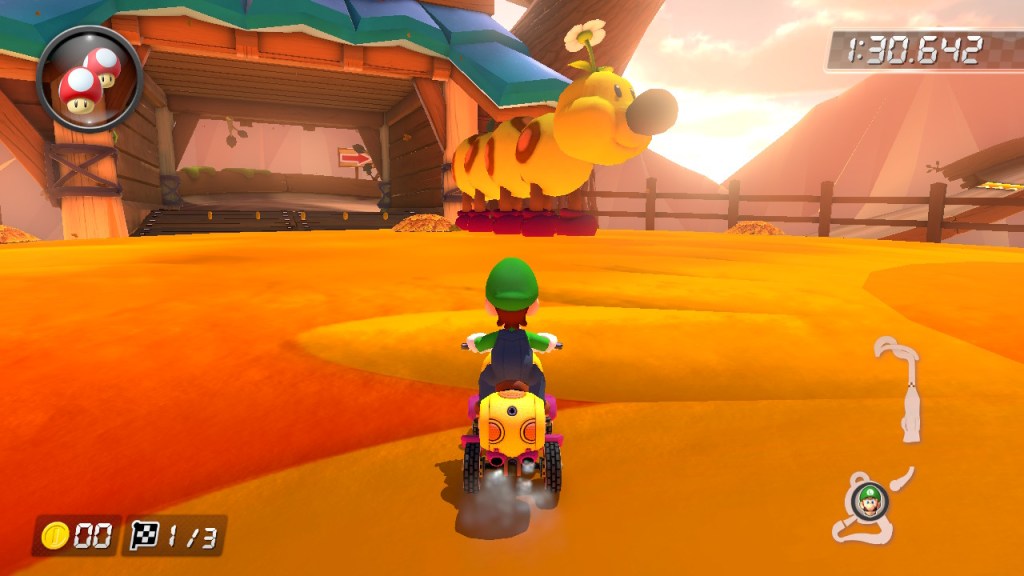
Unfortunately, Maple Treeway suffers from an over-dominance of its namesake species.
Maples are the only tree species present on-site, leading to a low biodiversity, with the only species seen along the track other than maples being Wigglers.
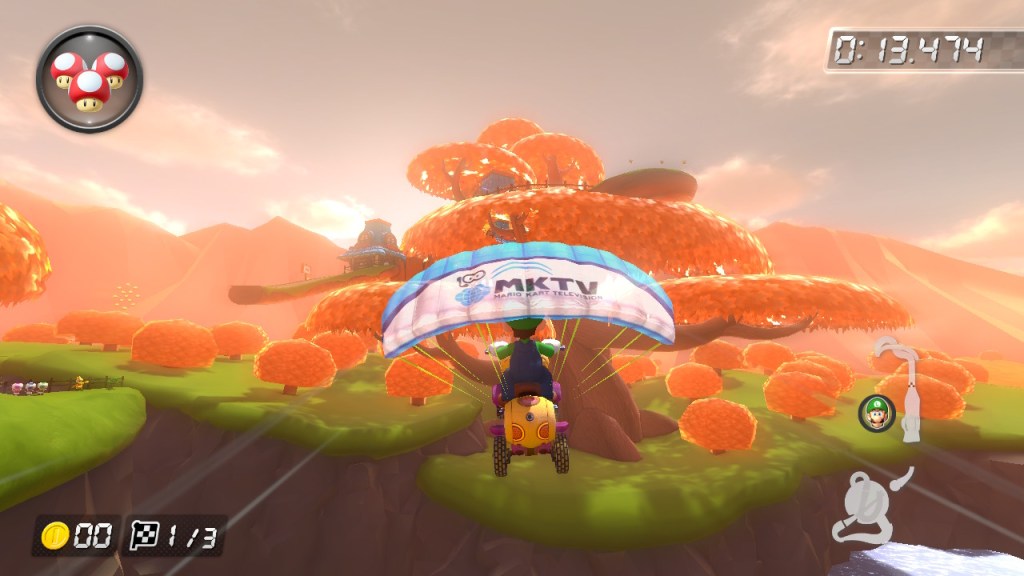
The site clearly isn’t being managed as a maple plantation, so why it hasn’t been underplanted with a more diverse broadleaf mixture is beyond me!
2. Wild Woods – Mario Kart 8
Now we’re getting to good woodland management.
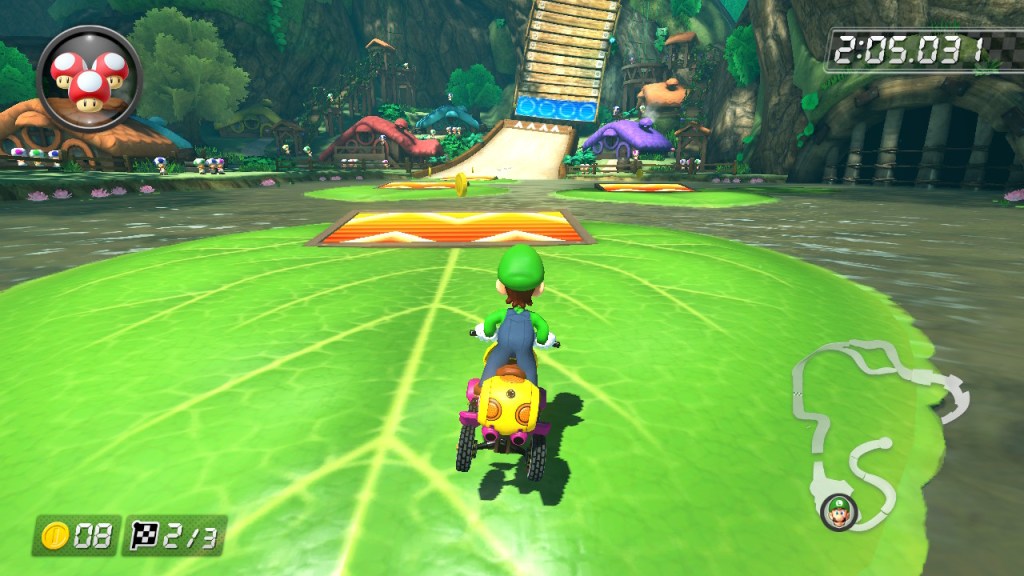
Firstly, Wild Woods’ eco-friendly housing development scheme is to be commended.
A thriving Shy-Guy residential area has been created along the track, with the timber constructed tracks and housing being a great form of carbon storage.
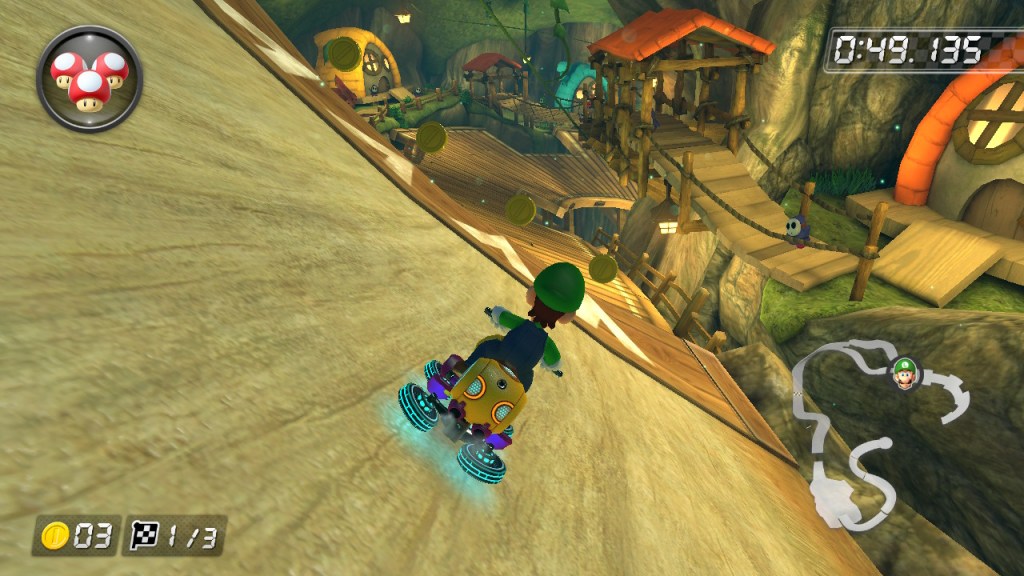
Timber-based infrastructure is also a great incentive for the Shy Guys to continue to sustainably manage Wild Woods, rather than convert it to another land-use.
Unfortunately, Wild Wood’s management regime is held back by its directing road traffic throughout riparian habitats. High-speed kart-racing action throughout such habitats may be a contributor to Wild Wood’s non-existent amphibian population!
Thus, Wild Woods has been held back from the top spot, which goes to…
1. Riverside Park – Game Boy Advance
Riverside Park is Forests in Theory’s top pick for Mario Kart’s best woodland management regime. It does nearly everything “right”.
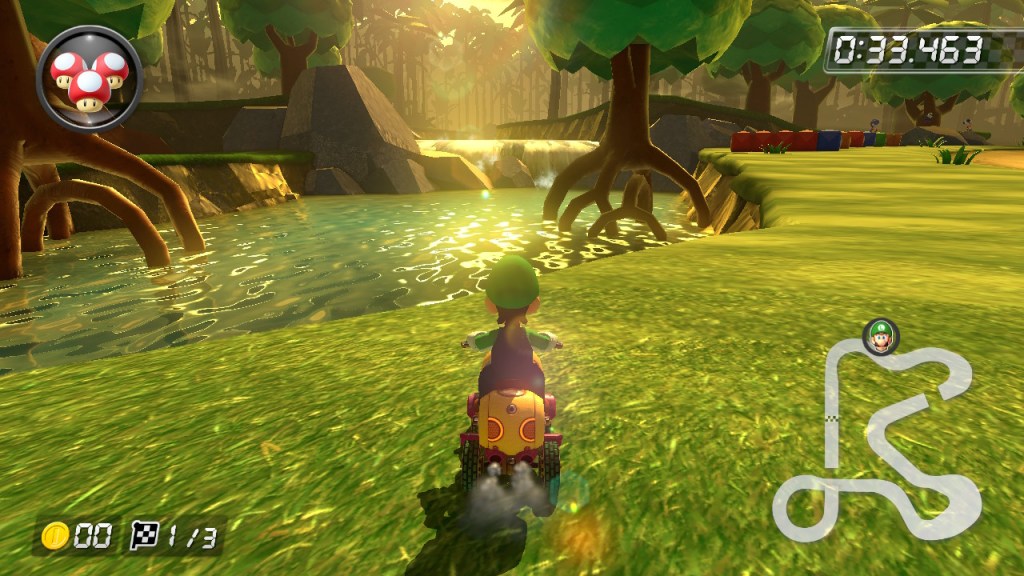
For example, unlike Wild Woods, the player does not drive through the track’s main waterways.
Instead, buffers are created between the road and the sensitive mangrove habitat. Thus, the effects of vehicular pollution and soil compaction have been reduced by good land-use planning and zoning (Pennsylvania Land Trust Association, 2014).
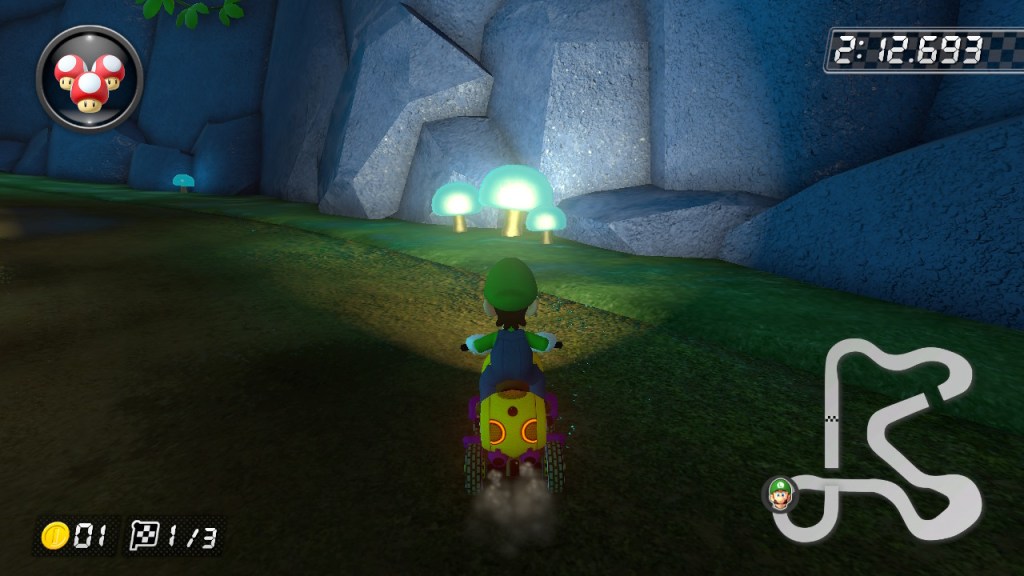
The mushroom cave also suggests that soil health is highly prioritised by the woodland manager, with it being the only woodland track on this list to have a notable fungal presence (Frąc et al., 2018).
The only potential management oversight is the high presence of Piranha Plants along the track. Whilst acceptable is small numbers, the species’ high colonising capacity (due to their having feet) means that they may become an invasive plant species in the future.
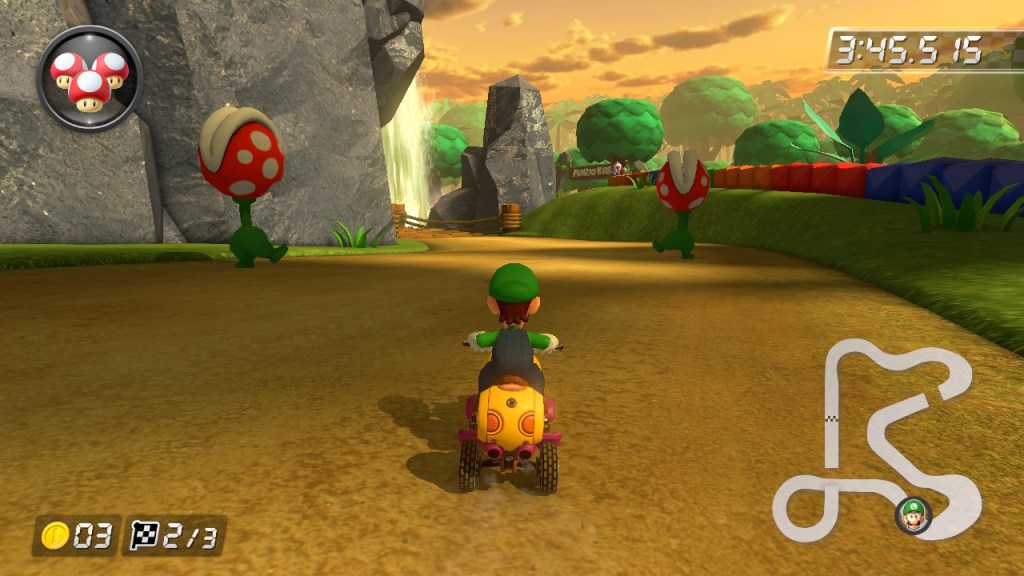
However, Riverside Park’s strengths far outweigh its weaknesses. Thus, it is Forests in Theory’s pick for the best woodland management regime in the Mario Kart franchise.
Thanks for reading,
Remember to leave a comment and subscribe!
Bethany Breward, 03/06/2025.
References:
Frąc, M., Hannula, S.E., Bełka, M. & Jędryczka, M. 2018. Fungal Biodiversity and Their Role in Soil Health. Frontiers in Microbiology. [E-journal]. 9(707). Available at: https://doi.org/10.3389/fmicb.2018.00707. Accessed 3rd June 2025.
Hill, J.L. & Hill, R.A. 2001. Why are tropical rain forests so species rich? Classifying, reviewing and evaluating theories. Progress in Physical Geography. [E-journal]. 25(3), pp.326–354. Available at: https://doi.org/10.1191/030913301680193805. Accessed 3rd June 2025.
Pennsylvania Land Trust Association. 2014. The Science Behind the Need for Riparian Buffer Protection. [Online]. Available at: https://library.weconservepa.org/guides/131-the-science-behind-the-need-for-riparian-buffer-protection. Accessed 3rd June 2025.
UKFS. 2023. The UK Forestry Standard: The government’s approach to sustainable forestry. [Online]. Forest Research, Farnham.
 Forests in Theory
Leave a comment