
The importance of young people’s participation in the forestry and woodland management sector cannot be over-stated.
No matter how high the State Pension age gets, sustainability cannot be achieved in the long-term without inspiring, educating, training, and hiring the next generation of foresters.

Some industries are attempting to short-cut this learning process via the implementation of artificial intelligence (AI) technology in the workplace.
Whilst AI language models and image generation have become rather impressive, AI cannot, and should not, become the sole inheritor of the forestry tradition.
Thus, we must fall back to Britain’s education system to promote the future of forest management.
Britain gets off to a strong start in this regard. When a child is born, they will likely have many outdoor learning opportunities ahead of them.
For example, Forest Schools of varying levels of quality and grift are becoming increasingly common, with there now being over 200 Forest Schools in the UK (Kenyon, 2025)!
For readers unfamiliar with Forests Schools as a concept, they are typically defined as schools where a significant proportion of learning occurs in a forest setting (Kenyon, 2025).
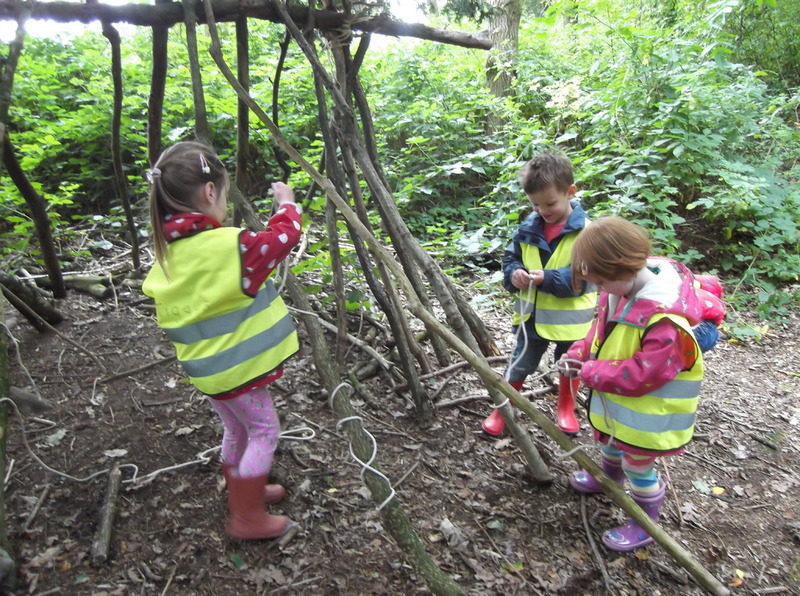
Forest School’s increased popularity in the UK clearly indicates increased public and teacher interest in teaching basic woodland concepts to children. Increasing tablet-wielding toddlers exposure to fresh air alone is a high priority for many.
Forest Schools are certainly not the ideal form of forest education for every child. However, important soft skills are developed in Forest School settings, and foundational woodland knowledge, such as wildlife ID, can be derived from them (O’Brien, 2018).
Whilst this knowledge in itself does not a forester make, it’s certainly a respectable start!
Unfortunately, Britain’s strong start in forest education is squandered on her youth’s eleventh birthdays…
When a child enters secondary school, education is no longer oriented towards having fun, novel sensory experiences, and growing a child’s sense of curiosity alone.
Most secondary schools would of course promote such admirable benefits of education. But they must never be at the detriment of good exam results, which are a source of school’s prestige, funding, and are necessary for many future career paths.
Thus, the next 5 years are viewed by many parents and teachers as GCSE-preparation.
If woodlands aren’t on the required national curriculum, then they are not an educator’s, or diligent student’s, priority.

Worsening the 11-16 situation is the lack of formal woodland-based weekend activities for teenagers.
Most forest-activity providers instead elect to appeal to the younger, more mud-pie oriented demographic!
Thus, the ages of 11 to 16 years old become forestry’s lost years.
Not all is lost in these years, of course! GCSE Geography is the commonly taught school subject that comes the closest to teaching forestry.
Unfortunately for the future of British forests specifically, most education that children receive in such Geography classes is not pertaining to temperate forests.
Rather, the emphasis of secondary education is on tropical rainforests.
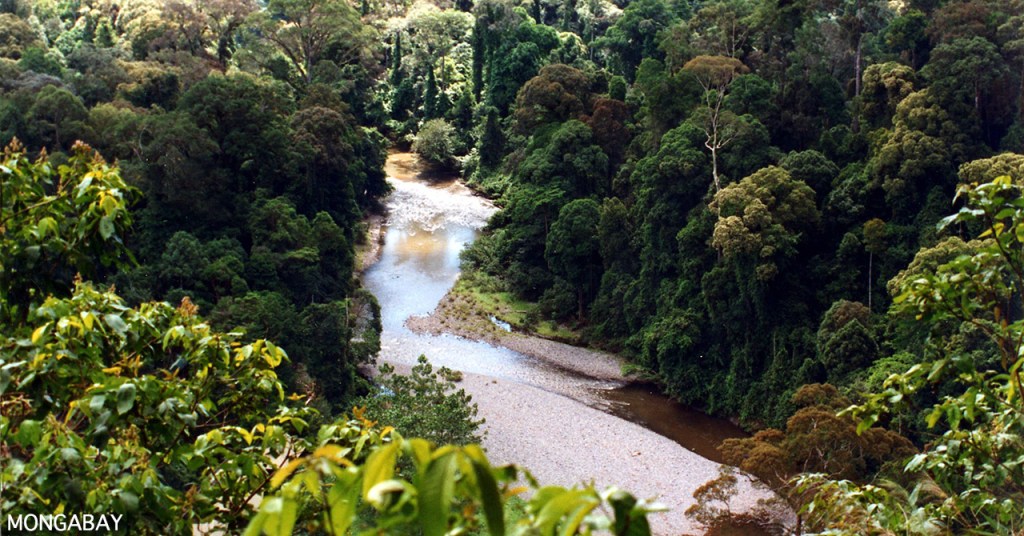
Learning about tropical rainforests certainly provides some transferable skills for children interested in working in British forestry. However, the general absence of temperate forest systems in secondary education is rather strange.
Where secondary school curriculum and field trips lack, forced Sunday walks in boggy cow fields must pick up the slack.
It is important to note that whilst enjoying woodlands for its own sake is important for children’s development, recreational walks alone do not develop more than a basic academic understanding of forests in a child.
Nor do they showcase the forest as a potential workplace!
For those who want to go further, forests should not be relegated to play alone!
Thankfully for 11-16 year olds who are committed to receiving an education in forestry and woodland management, there is light at the end of the tunnel.
Many colleges offer BTEC qualifications in Forestry and Arboriculture, and limited apprenticeships are also available.
For students seeking to extend their academic knowledge further, some universities also offer forestry, woodland management, and conservation degrees.
However, for many talented students, the lost years of forestry education have already taken their toll.
These “lost years” have ruled out forestry as a career, especially for urban students.
Such students are far less likely to have direct role models and connections already working in the industry, and thus their impression of the industry is derived entirely from media depictions and the education system.
Thankfully for the foresters of tomorrow, environmental activists and organisations are tackling the “11-16 lost years”.
For example, following vigorous campaigning led by naturalist Mary Colwell, the Department for Education (DfE) has confirmed the development of a GCSE Natural History qualification (OCR, 2025)!
This is an excellent start. However, just because a GCSE exists, doesn’t mean it’s commonly offered by most secondary schools.
For example, it is statistically likely that you, the reader, were not offered GCSE astronomy at school.

Thus, without further action, the development of a Natural History GCSE does not effectively tackle the plight of forestry’s lost years.
Marketing of forestry education’s importance in the “lost years” will be needed alongside the GCSE.
Parents and schools need to know that the Natural History GCSE is worth the effort to obtain. Explain to educators and the public why it’s important for children to go beyond photosynthesis!
Additionally, forestry companies must be willing to invest in youth apprenticeships schemes and training, lest talent move into other, usually higher-paying, industries.
After all, there’s no point generating interest in forestry work if there’s no entry-level training and job roles available to young people.
Finally, and most importantly –
The land itself does not change simply due to a manager’s age. An ageist land manager is therefore managing land beyond their scope.
Thanks for reading,
Feel free to leave a comment!
If you like Forest in Theory’s Work, consider donating.
Bethany Breward, 05/06/2025
References
Butler, R. 2019. Rainforest in Borneo. [Photograph]. Available at: https://worldrainforests.com/01-what-are-tropical-rainforests.html. Accessed June 4th 2025.
Kenyon, M. 2025. Into the woods: the rise of Forest School. The New Statesman. [Online]. 7th February 2025. Available at:https://www.newstatesman.com/spotlight/sustainability/biodiversity-nature/2025/02/into-the-woods-the-rise-of-forest-school. Accessed 31st May 2025.
NRM. 2013. Science Concludes Lumberjacks Are More Manly Than Sports. [Photograph]. Available at: https://www.newrisingmedia.com/blog/2013/8/15/science-concludes-lumberjacks-are-more-manly-than-sports.html. Accessed June 4th 2025.
O’Brien, L. 2018. Forest Schools: impact on young children in England and Wales. [Online]. Available at: https://www.forestresearch.gov.uk/research/forest-schools-impact-on-young-children-in-england-and-wales/. Accessed June 4th 2025.
OCR. 2025. GCSE Natural History. [Online]. Available at: https://teach.ocr.org.uk/naturalhistory. Accessed June 4th 2025.
 Forests in Theory
Leave a comment