
Dogs are everywhere in forestry, and it’s easy to see why.
For some foresters, a dog is simply kept as good company. The mental health benefits of having such a companion in the workplace are well-known (Wagner & Pina e Cunha, 2021).
For others, a working dog’s presence is vital to getting the job done safely, on time, and with minimal environmental disturbance.
It is the latter of these “working dogs” that will be discussed further in today’s article, which includes breed recommendations, as well as animal care advice.
Before you choose a work dog, it’s important to ask yourself – “What is my budget? Is a dog a justifiable business expense?“
Depending upon the breed and the seller, a dog can be an expensive investment. Unless a pedigree is absolutely necessary, a mutt (crossbreed) is a perfectly acceptable work dog.
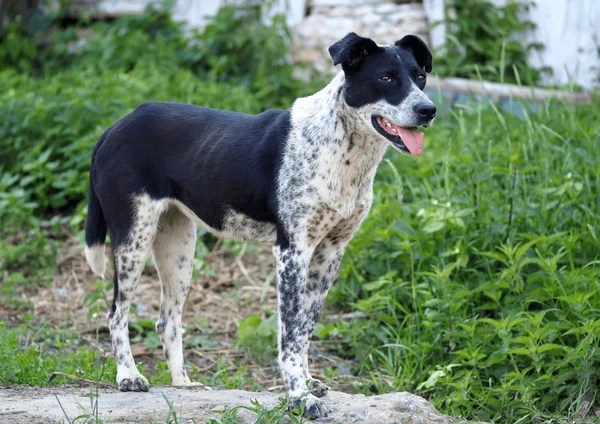
According to the RSPCA mutts may also suffer from fewer medical issues than pedigrees (RSPCA, 2023)!
No matter what breed you get, don’t cut costs at this initial stage by buying from a disreputable breeder.
Buying a dog from a disreputable and unethical seller is not just morally wrong. It will also bite you in the business expenses, with unethically bred dogs having a far higher tendency towards severe health issues (The Humane Society of the United States, 2012).
Acquiring a shelter dog is far less risky, as the dog’s medical behavioural history is typically known by the shelter, and communicated to the customer.
Besides the initial costs of acquiring the dog, there will also be on-going costs to consider throughout the dog’s lifetime, such as food and routine vet visits.
Choosing you dog
If you can justify buying a dog, what breed should it be?
As earlier stated, a mutt can be a great choice for a working dog. However, it would be inconvenient to list every forestry-appropriate crossbreed.
Thus, I have provided a short list of appropriate pedigrees instead.
Labrador retriever
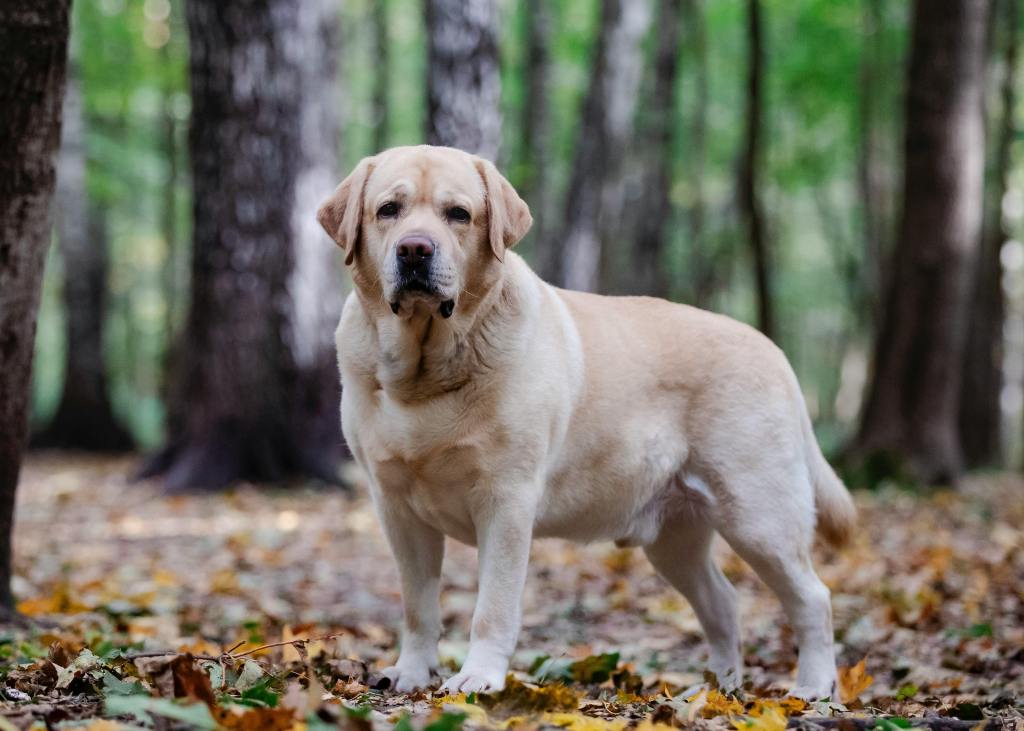
Labradors are a good all-rounder work dog, being intelligent enough to adapt to a wide variety of tasks and settings, and strong enough to traverse the steepest of job sites.
They’re typically friendly dogs. This doesn’t mean that recall and exposure training won’t be necessary, but it does make them pleasant to be around, both for you and for those you encounter on the job (including other dogs).
Just make sure that they get enough exercise, as many Labradors suffer from obesity and hip and elbow dysplasia.
Hip and elbow dysplasia is not fully prevented by exercise, as it is primarily a genetic defect (Woolliams, Lewis, & Blott, 2011). However, maintaining a healthy weight reduces the stress placed on affected joints.
Border collie

Whilst more well-known for their agricultural role, border collies are also a strong choice for a forestry work dog.
They’re intelligent, high-energy, and can be trained for both general and specialist tasks.
Due to being bred for herding purposes, their herding instincts will likely need to be managed when in the workplace.
However, with care and good training, herding instincts are not detrimental to the forester, but actively useful!
For example, border collies have been used in past Chilean reforestation and conservation efforts, having been trained to spread plant seeds from backpacks (BBC, 2020).
Jack russell



Jack russells are the smallest recommendation of this list, being originally bred to hunt foxes, rats, mice, and rabbits.
Their ability to fit in dens and burrows doesn’t just make them suitable for hunting – it also means that they take up less space in your car.
For the less physically-gifted forester, a Jack Russell’s smaller size also means that it can be easily carried if need be (eg. due to injury).
Just make sure their recall is good, or you might lose them in the undergrowth!
Golden retriever
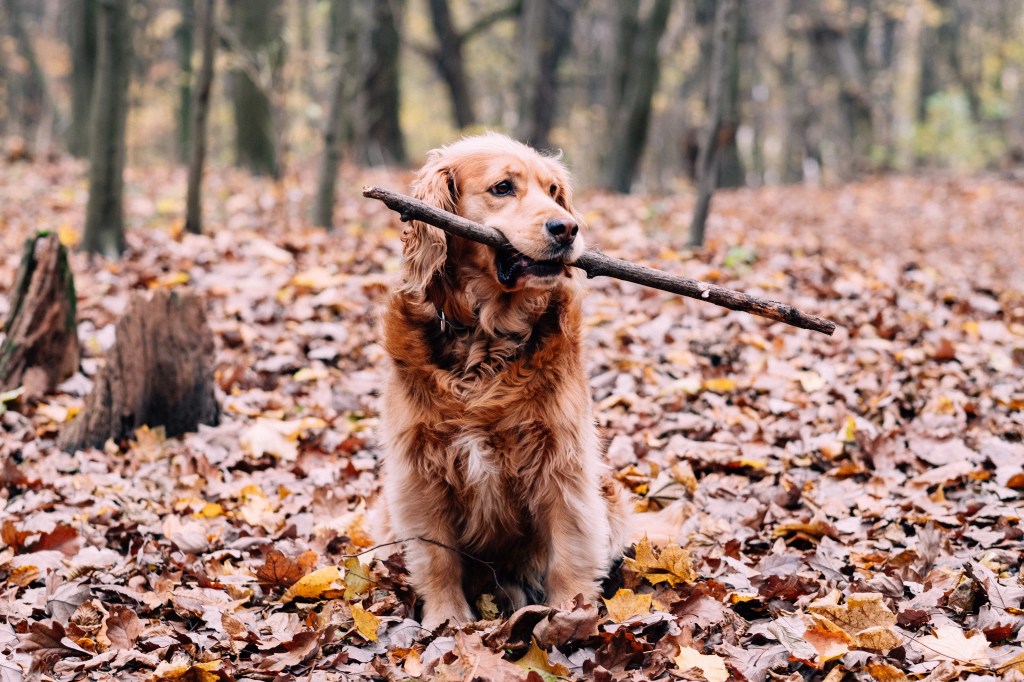
Intelligent, eager to please, and outdoorsy. Golden retrievers weren’t bred for forestry work, but they’re well-suited to it!
Just make sure to regularly brush them. Golden retrievers are notorious shedders, and the fur build-up can be diabolical without regular grooming.
Labradors, collies, Jack russells, and golden retrievers are by no means the limit in terms of breed choice.
It’s important to consider what duties you want the dog to undertake BEFORE choosing them.
For example, if you need a hardy dog able to accompany you on long hikes, don’t invest in a pug!
Animal care advice
Breed-specific animal care advice will need independent researching on your part.
However, general animal care advice includes:
- Regular exercise. Without this, your dog will be more prone to health and behavioural issues.
- Regular feeding and watering. When working, make sure you’ve taken enough food and water for yourself and your dog.
- Fleaing, deworming, and other routine medical treatment.
- Strong recall training. This is non-negotiable in forestry work.
- Daily paw inspection and maintenance (eg. thorn removal).
- Tick inspections and removal.
Overall, being considerate of the dog’s physical and emotional needs is a must in forestry.
Inhumane treatment of any animal, wild or domesticated, will not be tolerated in the industry.
I hope that this article helped.
Thanks for reading,
Bethany Breward, 16/06/2025
References
BBC. 2020. The sisters regrowing forests helped by their dogs. [Online]. Available at: https://www.bbc.co.uk/news/av/world-latin-america-53532912. Accessed 16th June 2025.
RSPCA. 2023. Pedigree dogs health problems. [Online]. Available at: https://www.rspca.org.uk/adviceandwelfare/pets/dogs/puppy/pedigreedogs/health. Accessed 16th June 2025.
The Humane Society of the United States. 2012. Veterinary Problems in Puppy Mill Dogs. [Online]. Available at: https://www.humaneworld.org/sites/default/files/docs/veterinary-problems-puppy-mills.pdf. Accessed 16th June 2025.
Wagner, E. & Pina e Cunha, M. 2021. Dogs at the Workplace: A Multiple Case Study. [E-journal]. Animals, 11(1), p.89. Available at: https://doi.org/10.3390/ani11010089. Accessed 16th June 2025.
Woolliams, J.A., Lewis, T.W. & Blott, S.C. 2011. Canine hip and elbow dysplasia in UK Labrador retrievers. The Veterinary Journal. [E-journal]. 189(2), pp.169–176. Available at: https://doi.org/10.1016/j.tvjl.2011.06.015. Accessed 16th June 2025.
 Forests in Theory
Leave a comment