
Staggering to the park, your sweat-greased forehead fries under the midday sun. As you fry, your lunch becomes a carb-rich soup. ‘A healthier cooking method,’ you suppose.

In scenarios such as these, any sensible health body would advise you to seek shade immediately.
Unfortunately, the July 2025 heatwaves have vastly limited your shade-finding opportunities, especially in London, where increased heat stress and drought are leading to an increase in reported sudden branch drop (SBD) syndrome.
Sudden branch drop syndrome is a biological phenomenon where, with little to no sign of weakness prior, mature trees suddenly shed large limbs (Barrell, 2014).
It is also known as summer branch drop syndrome, as the phenomenon typically occurs during or just after prolonged hot and dry weather (Rushford & Patch, 2007).
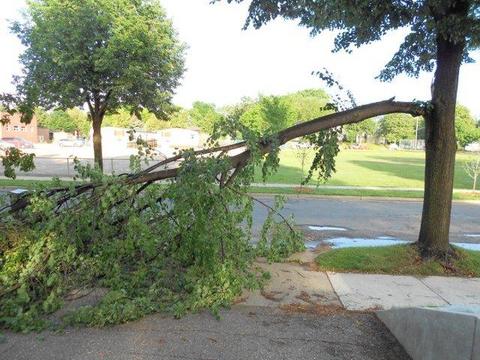
The inter-relationship between hot and dry weather conditions and SBD are not fully understood, but there are multiple theories.
For example, it has been suggested that when rainfall follows a prolonged dry spell, the sudden influx of water into the tree places stress upon pre-existing internal fractures.
These internal fractures can form in various ways, including winter storm damage, and decay (Rushford & Patch, 2007).
Young and vigorous trees are less prone to SBD than mature and over-mature trees. However, if and when SBD syndrome will occur in a tree is not reliably predictable as of yet.
Despite the risks associated with them, mature urban trees certainly improve life satisfaction and expectancy more than they detract; public perception data suggests that the public prefers large mature trees (and the biodiversity associated with them) to younger trees (Lupp et al., 2022).

The likelihood of you or anyone that you know being affected by SBD is very low.
However, SBD can have grave consequences. It should not be taken lightly, especially in highly frequented areas.
London has unfortunate experience of the risks posed by SBD.
In 2012, a woman died at Kew Royal Botanical Gardens due to SBD syndrome when a large branch from an at-risk Lebanese cedar (Cedrus libani) fell on top of her (BBC, 2014).
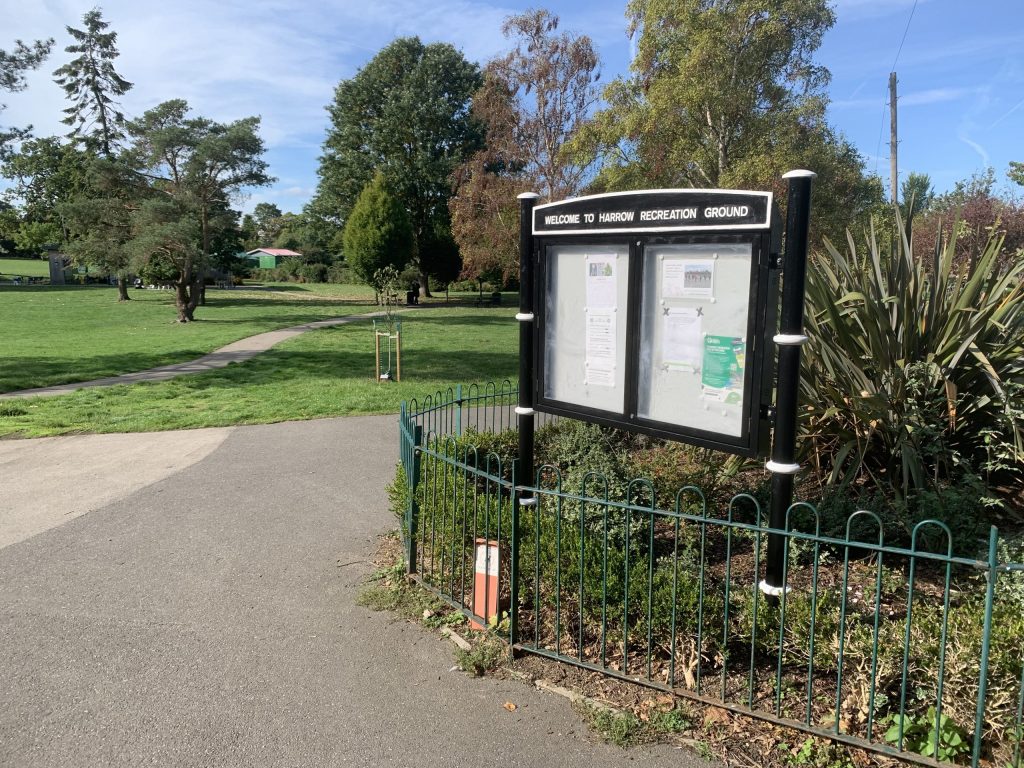
Thus, whilst no injuries or deaths have occurred from Harrow Council’s multiple 2025 SBD incidents as of yet, the council is concerned
It has issued a public statement warning residents against sitting under or near its trees (Edwards, 2025).
But other than warning residents against going near trees entirely, what can be done to reduce the danger posed by SBD?
General measures to reduce the risk and likelihood of SBD affecting the public include:
- Regular tree health inspections, especially during and after prolonged drought. Tree health professionals must inspect trees that pose a threat to the public, as external warning signs of SBD are not obvious.
- Tree watering.
- Planting drought-tolerant tree species.
- Pruning large branches that overhang highly frequented areas.
Of course, such measures don’t mitigate the root cause of increased drought frequency and intensity (global warming)!
However, the adaptation of urban tree care to the threats of global warming is clearly necessary for public welfare.
After all, a well-managed urban tree should not be a liability. It should be a shade-bearing, temperature-regulating asset.
Thanks for reading,
Bethany Breward, 13/07/2025
References
Arborcorp. 2019. Summer Branch Drop. [Photograph].
Barrell, J. 2014. Summer Branch Drop: time for a rethink? – Jeremy Barrell FICFor. [Online]. Available at: https://charteredforesters.org/summer-branch-drop-jeremy-barrell. Accessed 13th June 2025.
BBC. 2014. Erena Wilson Kew Gardens death: Branch fall ‘an accident’. [Online]. Available at: https://www.bbc.co.uk/news/uk-england-london-27869025. Accessed 13th June 2025.
Edwards, T. 2025. Heatwaves leave London’s trees under extreme stress. [Online]. Available at: https://www.bbc.co.uk/news/articles/c2d07rxx816o#:~:text=A%20council%20in%20London%20has,made%20worse%20by%20the%20heatwaves. Accessed 13th June 2025.
Lupp, G., Kantelberg, V., Fäth, J., Hirschbeck, T., Käsbauer, C., Ritter, A., Schisslbauer, J. & Pauleit, S. 2022. Through the Eyes of Forest Visitors—Perception and Scenic Preferences of Munich’s Urban Proximate Woodlands. Forests. [E-journal]. 13(10), p.1584. Available at:https://doi.org/10.3390/f13101584. Accessed 13th June 2025.
Rushford, K.D., & Patch, D. 2007. Summer Branch Drop. July 2007. D O E Arboricultural Advisory & Information Service.
 Forests in Theory
Leave a comment