
Agroforestry is defined by the UK government as “the integration of trees into the farming system, while maintaining or enhancing the farm’s main agricultural output” (Forestry Commission, 2024).
Surprisingly, the Mario Kart franchise has wholeheartedly met this definition of agroforestry not just once, but twice!
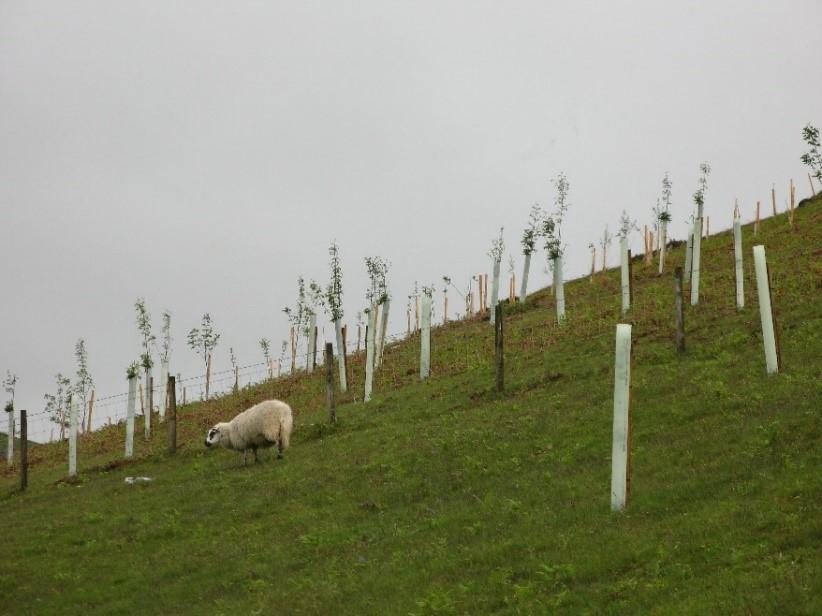
Thus, today’s blog post will discuss the two Mario Kart tracks that best exemplify agroforestry, and its benefits, to players.
Moo Moo Meadows and Farm
Within the Mario Kart franchise, Moo Moo Meadows and Farm meet the Forestry Commission’s definition of agroforestry the most thoroughly, with both being silvopastoral systems specifically.
First appearing in 1996 on the N64, Moo Moo Farm was Nintendo’s earliest excursion into the world of agroforestry.
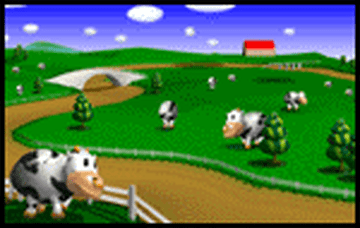
Moo Moo Farm captured the idyllic rural charms of the tree-d countryside well, and showed how agroforestry could improve a landscape aesthetically. However, its effectiveness as a productive silvopastoral system was questionable.
Isolated trees are scattered throughout the farm, but they do not appear to be mature. The absence of tree shelters to protect these immature trees from cattle browsing is therefore notable.
Perhaps these trees are older than they appear, but their growth is stunted by excessive grazing pressure?
Additionally, the similarity in size, form, and colour suggests that the farm has opted for single species and single age planting.
Whilst this may be more convenient for the managing farmer (and game asset developer), the use of only one tree species throughout the entire farm has limited the farm’s biodiversity, resilience, and aesthetic value.
Thus, whilst Moo Moo Farm is to be credited for its pioneering role in introducing players to silvopastoral systems, the implementation of agroforestry within the Mushroom Kingdom was clearly in its awkward phases in 1996.
Thankfully, in 2008, Mario Kart ventured into agroforestry once more, when Nintendo introduced audiences to Moo Moo Meadows on the Wii.
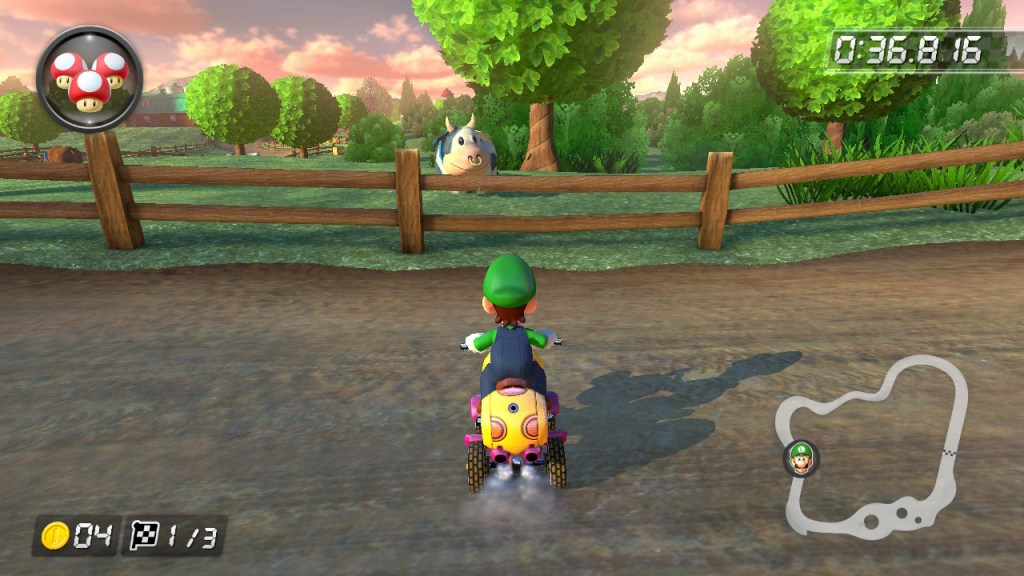
Within Moo Moo Meadows, planted trees have reached maturity, and can thus provide shade benefits to the livestock in a way that the younger system, Moo Moo Farms, cannot.
As well as improving animal welfare via the provision of shade, implementing trees on dairy farms can also have productivity benefits (England et al., 2020).
Thus, its integration of trees into the farmed landscape has likely improved Moo Moo Meadow’s agricultural output (i.e. milk output).

Depending upon the Mushroom Kingdom’s agricultural grant systems, Moo Moo Meadows may also receive grant payments for its increased provision of ecosystem services (eg. biodiversity, carbon storage).
Agroforestry in the future…
To improve Moo Moo Meadows as a silvopastoral system, the fences lines should removed, and be replaced with hedgerow planting.
This would result in increased tree cover on the farm, and its associated benefits, without reducing grazing area available to its herd.
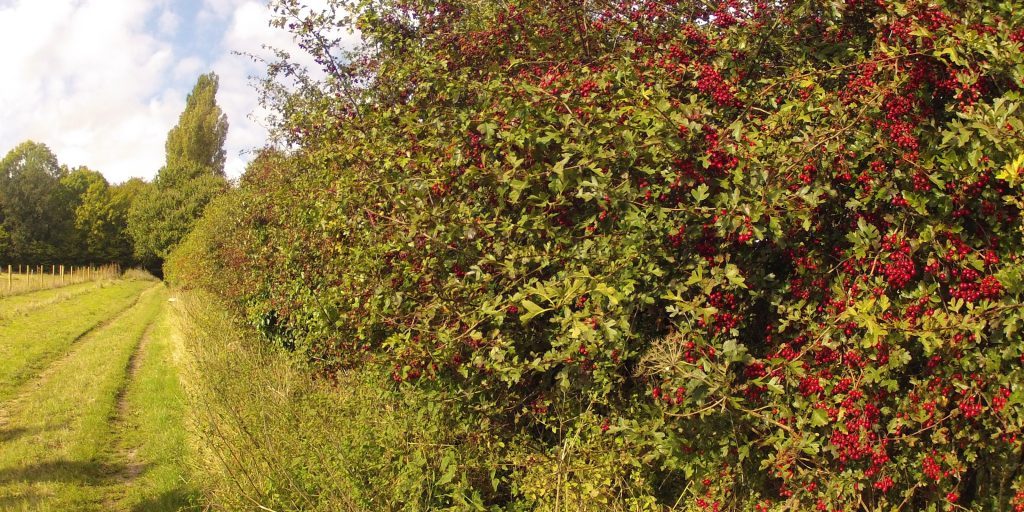
Overall, both Moo Moo Farm and Meadows have increased their resilience to storms, heatwaves, livestock disease outbreaks, and instability in the dairy market via their tree planting.
Let’s just hope that the United Kingdom will take a leaf out of the Mushroom Kingdom’s book!
Thanks for reading,
If you enjoyed this post, feel free to like, comment, subscribe, and donate.
References
England, J.R., O’Grady, A.P., Fleming, A., Marais, Z. & Mendham, D. 2020. Trees on farms to support natural capital: An evidence-based review for grazed dairy systems. Science of The Total Environment. [E-journal]. 704, p.135345. Available at: https://doi.org/10.1016/j.scitotenv.2019.135345. Accessed 23rd July 2025.
Farming Connect. n.d. Welsh agroforestry system. [Photograph]. Available at: Farm Wildlife. n.d. Farm hedging. [Photograph]. Available at: https://farmwildlife.info/how-to-do-it-5/field-boundaries/hedges/. Accessed 23rd July 2025. Accessed 23rd July 2025.
Farm Wildlife. n.d. Farm hedging. [Photograph]. Available at: https://farmwildlife.info/how-to-do-it-5/field-boundaries/hedges/. Accessed 23rd July 2025.
Forestry Commission. 2024. A guide to agroforestry. [Online]. Available at: https://www.gov.uk/guidance/a-guide-to-agroforestry#different-types-of-agroforestry. Accessed 6th June 2025.
 Forests in Theory
Leave a comment